Master Road Signs.
Pass With Confidence.
Free national road sign practice tests with sourced explanations and a review of the signs you miss.
- 100% Free
- Official Sources
- No Sign-Up
- Works on All Devices
Choose Your State
Choose handbook practice for one of our five launch states, or practice nationally.
Your Road Sign Readiness
National Practice is available now. Readiness scoring, weak-sign analysis and personalized recommendations are coming in a later phase.
Saved on this device · Local-first privacy
Readiness is an educational progress indicator based on practice activity, not an official DMV exam score or guarantee.
Category Mastery
Awaiting practice · Complete tests to track category mastery
Signs Holding You Back
Signs you miss during practice will appear here so you can review them and reinforce your knowledge.
Popular Ways to Practice
Tailor your study routine with focused drills, diagnostic road tests, and targeted mistake reviews.
Road Signs Test
Test your knowledge with realistic sign questions and instant explanations.
Start National PracticeWeak Signs
Practice the signs you miss most often.
Start National PracticeConfusing Signs
Compare similar signs side by side and learn the differences.
Start National Practice60-Second Challenge
Fast-paced practice for quick sign recognition.
Start 60-Second ChallengeDaily Challenge
Build consistency with a new challenge each day.
Start National PracticeSurvival Mode
Keep answering until you reach the mistake limit.
Start Survival ModeLearn Road Signs & Meanings
Study sign classifications, physical shapes, standard colors, and legally mandated driver actions.
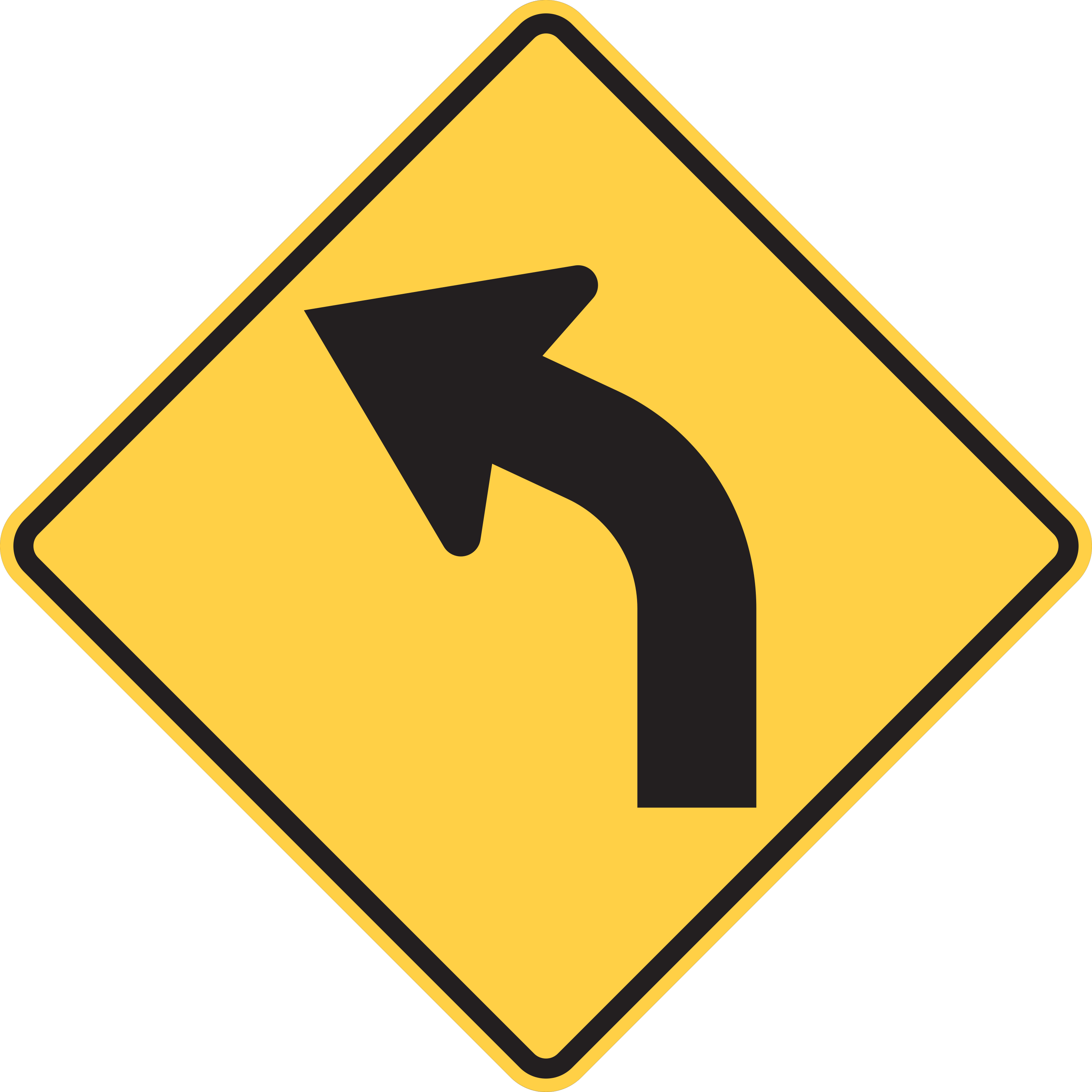
Warning Signs
Yellow diamond signs alerting drivers to curves, intersections, and road conditions ahead.
Regulatory Signs
Mandatory traffic laws, right-of-way rules, turning restrictions, and speed regulations.
Guide Signs
Green, blue, and brown signs providing directions, mile markers, and highway junctions.
Construction Signs
Orange warning signs alerting motorists to temporary work areas, flaggers, and detours.
Priority Signs
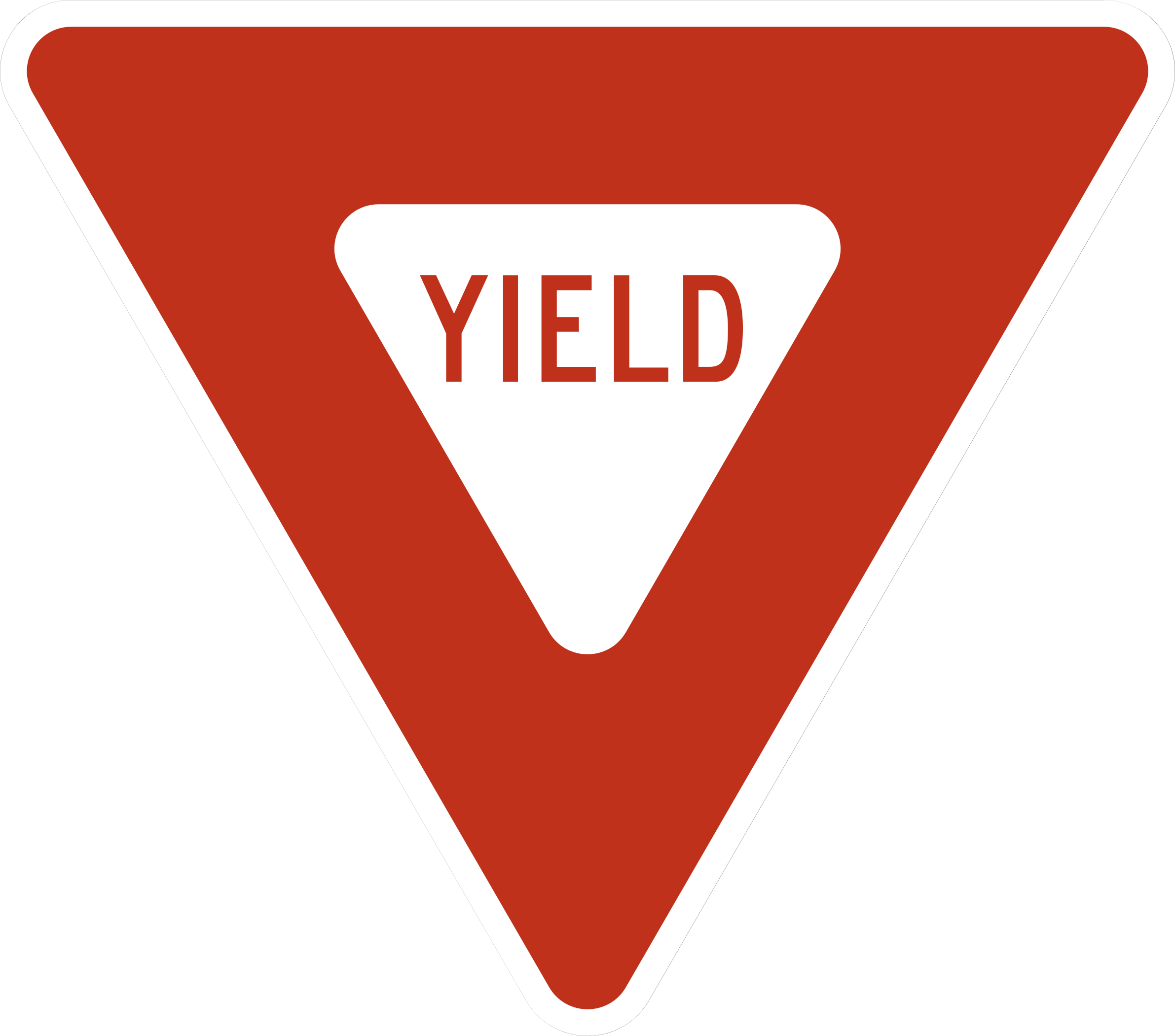
Yield and stop controls establishing right-of-way priority at intersections and merges.
Road Markings
Centerline markings, solid barrier lines, dashed passing zones, and painted roadway arrows.
How the Free Road Sign Practice Test Works
Our practice testing system is engineered around active recall and real-world driving comprehension, designed to build road-sign recognition and driving-response knowledge for state knowledge tests.
Select Your State
Choose your state to align your practice with specific rules, emphasis signs, and official driver licensing guidelines from your jurisdiction.
Answer Visual Questions
Practice identifying authentic vector road signs rendered to exact FHWA MUTCD specifications, answering questions on shapes, colors, and legal meanings.
Instant Official Explanations
After submission, each National Practice question provides a plain-English explanation citing the existing official MUTCD source sections.
Isolate & Master Weak Signs
Each completed National Practice session lists the signs you missed with explanations and driving responses to review.
Why Sign Meaning and Driving Response Both Matter
Many learners assume recognizing a sign’s visual name is enough to pass a driver’s test. In reality, state licensing exams frequently test your immediate operational driving response.
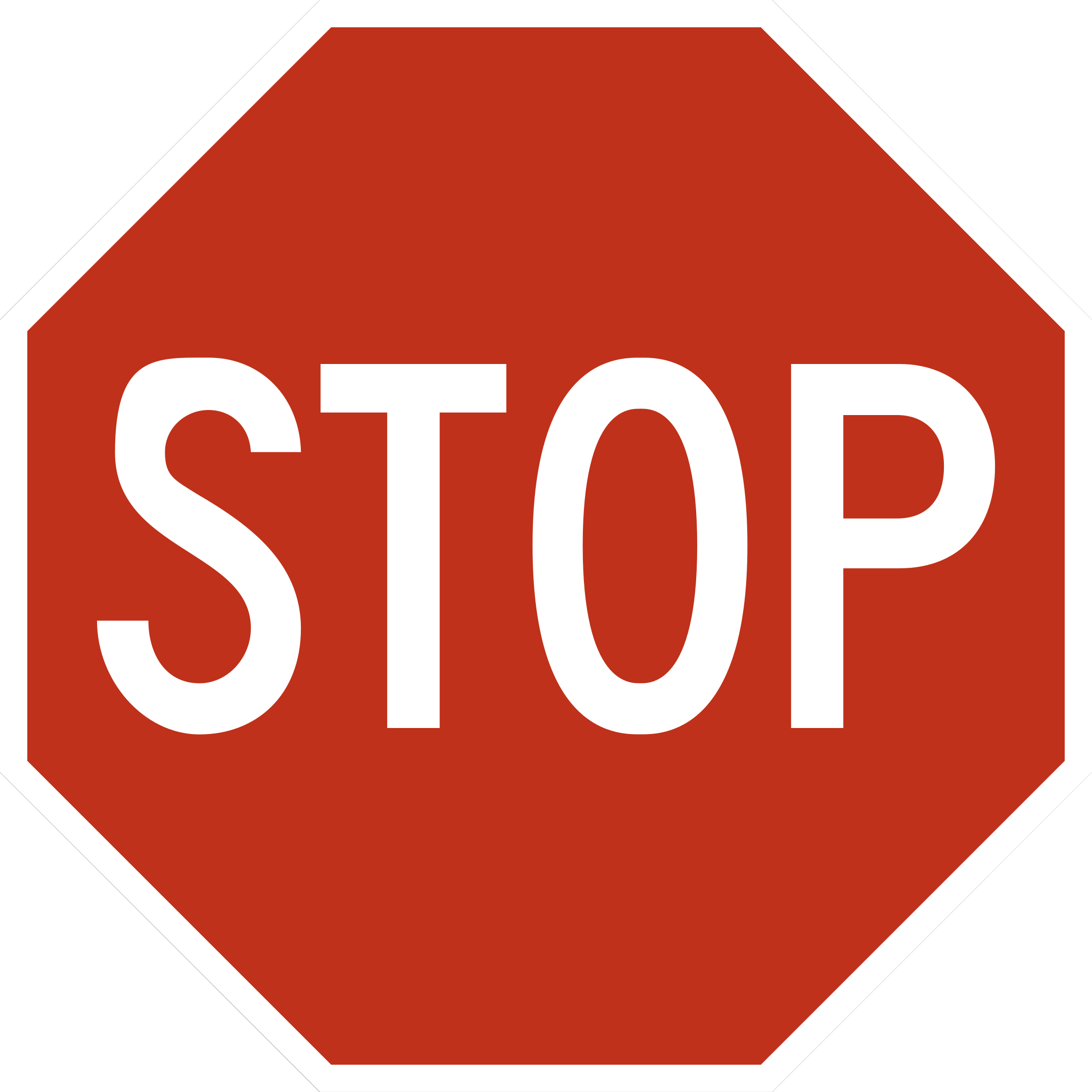
For example, knowing that an octagonal red sign is called "Stop" is only step one. The legal requirement dictates:
- Coming to a complete stop before the stop line or marked crosswalk.
- Yielding the right-of-way to pedestrians crossing the roadway.
- Yielding to any approaching vehicle on intersecting roads before proceeding.
Similarly, a Yield sign (R1-2) requires slowing down and conceding right-of-way, stopping completely only when approaching cross traffic or pedestrians make it unsafe to proceed. FreeRoadSignsTest.com highlights these operational differences on every sign explanation.
Explore our road signs and meanings library to study the 68 verified signs in our national study curriculum by physical shape, color, legal meaning, and driver response.
How Weak-Sign Practice Accelerates Mastery
Traditional practice tests waste your time re-testing common signs you already know. Our diagnostic practice isolates your specific knowledge gaps.
Automatic Error Logging
Whenever you select an incorrect answer or hesitate on an operational prompt, that sign is logged in your browser session for targeted remediation.
Contextual Distinction Drills
Instead of simply showing the sign again, our drills present contrasting options to ensure you recognize the critical differences between related signs.
Verified Mastery Confirmation
A sign is marked mastered after at least two correct practice attempts with no recorded errors.
Why Similar Signs Are Frequently Confused
Many road signs share similar shapes, colors, or symbols while conveying distinct legal instructions. Learn the essential distinctions before taking your test.
Stop vs Stop Ahead
Stop (R1-1): Regulatory octagon. You must stop immediately at this sign location.
Stop Ahead (W3-1): Yellow diamond warning. Alerts you that a stop sign is ahead around a curve or hill, requiring gradual braking.
Do Not Enter vs Wrong Way
Do Not Enter (R5-1): Square sign with a white horizontal bar inside a red circle, posted at ramp exits to prevent entry.
Wrong Way (R5-1a): Red rectangular supplementary sign posted further along the ramp to warn drivers who entered inadvertently.
Do Not Pass vs No Passing Zone
Do Not Pass (R4-1): Vertical white regulatory rectangle posted on the right side of the roadway.
No Passing Zone (W14-3): Yellow pennant-shaped warning sign posted on the left side of two-lane roads for oncoming visibility.
Lane Ends vs Added Lane
Lane Ends (W4-2): Warning that your lane terminates, requiring a merge with adjacent traffic.
Added Lane (W4-3): Indicates a new lane is formed without requiring an immediate merge.
National Signs vs State-Specific Rules
The Federal Highway Administration’s Manual on Uniform Traffic Control Devices (MUTCD) provides the national baseline for sign shapes, colors, and dimensions across all 50 states.
However, official state driver handbooks place differing emphasis on specific signs and operational rules:
- North Carolina (NCDMV): Strong emphasis on school zone speeds, right-of-way at uncontrolled intersections, and work zone penalties.
- Missouri (DOR): Specific focus on flashing yellow arrows, roundabout navigation, and emergency vehicle move-over procedures.
- Illinois (SOS): Strict testing on railroad crossing crossbucks, no passing zones, and automated speed enforcement signage.
- Virginia (DMV): Dedicated manual sections on HOV lane markings, pedestrian hybrid beacons, and reversible lane signals.
- Georgia (DDS): Emphasizes Move Over laws, super-speeder enforcement, and freeway ramp metering signs.
How Official Sources Are Selected and Reviewed
We maintain strict factual integrity based on MUTCD 11th Edition with Revision 1 (December 2025). We do not use third-party test prep blogs, crowd-sourced question banks, or unofficial summaries.
Official State Driver Handbooks
Current driver manuals issued by state licensing bureaus (NCDMV, Missouri DOR, Illinois Secretary of State, Virginia DMV, Georgia DDS) define the local exam scope.
State MUTCD Supplements
State Department of Transportation traffic control supplements establish official state-specific sign variations and local highway standards.
FHWA MUTCD & SHS Standards
The national MUTCD 11th Edition Revision 1 and Standard Highway Signs (SHS 2024) provide exact vector artwork dimensions, color codes, and legal definitions.
Initial State Directory
Explore our launch states. Each state is backed by citations from its official state driver licensing authority.
Frequently Asked Questions
Clear, honest answers about our testing methodology, data provenance, and platform features.
Is FreeRoadSignsTest.com really 100% free to use?
Yes. Every road sign practice test, category drill, and weak-sign review on FreeRoadSignsTest.com is completely free. There are no paywalls, hidden fees, timed trials, or required credit card entries.
Do I need to create an account or provide an email address?
No registration is required. You can start practicing immediately upon loading the site. Your theme preference and active state selection are stored entirely on your device in your browser’s local storage.
How are the questions and road signs verified for accuracy?
National Practice uses verified sign records with official FHWA MUTCD 11th Edition with Revision 1 citations and original Standard Highway Signs artwork. Meaning and driving-response explanations link to those official sources. Our five state practice pages add official handbook context to the shared national questions.
Why does the test ask for driving actions instead of just sign names?
Official DMV written exams frequently evaluate whether you know the required legal driving action when encountering a sign, not merely its label. For example, knowing that a Yield sign requires slowing down and conceding right-of-way to crossing traffic—and stopping if necessary—is essential for safe driving and passing the test.
How does the readiness score work?
Your readiness score is an educational progress indicator calculated locally in your browser based on curriculum coverage across our 68 verified signs, overall practice accuracy, and answered questions. It helps you focus on areas needing review; it is not an official DMV exam score or guarantee.
Which states are supported initially?
National Practice and handbook practice for North Carolina, Missouri, Illinois, Virginia, and Georgia are available now. Choose a state to open its practice page. A saved state preference does not change the national question selection. Other states remain deferred.
Can I study effectively on a mobile phone or tablet?
Yes. FreeRoadSignsTest.com is designed mobile-first with responsive typography, touch-friendly 44px+ buttons, high contrast, and accessible dark mode, providing a seamless experience on any device.